
The Advisor's Growth Blog feature makes creating and optimizing blog posts simple, helping you focus on content marketing and SEO. Easy distribution options allow you to attract readers from various sources to your blog!
Step 1: Creating Blog Posts with Settings and SEO Details
Navigate to the Blogs Section
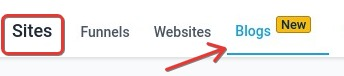
Go to Sites > Blogs to start creating your blog.
Set Up Your Blog
Enter the name of your blog.
Select a domain and add a slug (optional).
Write a brief description (around 250 characters) to improve SEO.

Note: Ensure the domain is added.

Customize the Blog Layout
Once details are added, you’ll land on the list view where you can create new blog posts or edit the blog site using the Blog Builder.
Edit the site layout, list view, and blog post card details to customize the blog home and blog post pages.

Create a New Blog Post
Click + New Post and provide the following:
Title
Description
Blog Post Image

Enhance Blog Posts with Elements The Blog Site Builder supports various elements to enhance your blog’s functionality:
Custom Code: Add custom code to headers, footers, and other sections to use across blogs, funnels, and websites via the Saved Sections feature.
SVGs: Integrate scalable graphics.
Maps: Embed maps for location display.

Use the Plus icon in the top left corner to add these elements.

Customize Blog Content
Use the editor toolbar to style your content, adjust fonts, and insert images or videos from your Media Library or YouTube.
Add list formats (numbered, bulleted, to-do) and hyperlinks as needed.

Set Up Blog Post Details After adding content, configure the following details:
URL Slug: Define the post path.
Category: Select from blog settings.
Keywords: Optimize for SEO.
Author: Assign an author (from blog settings).
Canonical Tags: Suggest to Google which version of the page to index.

Publish or Save Your Blog Post
You can choose to publish the post immediately, schedule it for a specific time, or save it as a draft.

Step 2: Adding a Blog Post List to a Website or Funnel
Your main Blog page will contain all your blog posts. Follow these steps to add a Blog Post List element:
Create or Add a Funnel/Website
Either create a new Funnel/Website or add a step/page to an existing one.

Edit the Page
Click the edit button to open the editor.
Add the Blog Post List Element
Select the Blog Post List element.
Choose between Standard or Compact layout.
Make any additional customizations to fit your blog’s design.
Add the Domain
Add the domain to the site within the Funnel/Website Settings.
To set the blog page as the default landing page (e.g., blog.mydomain.com), navigate to Settings > Domains > Edit Domain and select the blog page as the default page.
Step 3: Understanding Domains for Blogs
When you add a domain to the Funnel or Website, the blog post URL will follow this format:
Domain: XYZ.com
Slug of the post: b/sample-demo
Final URL: XYZ.com/b/sample-demo
Pro Tips for Blog Optimization
Categories: Blog posts require at least one category, but you can assign multiple categories. Category details (name, slug, SEO info) can be customized in Blog Settings.
Author & Keywords: Author details, including name, photo, and social media links, can be set up in Blog Settings. Keywords can be added when publishing the post.